On this page
- nerve and vessel injuries of the hand and forearm
- when early repair is important
- delayed reconstruction and muscle transfer
- toe-to-thumb or toe-to-finger transfer in selected cases
- common patient scenarios after hand trauma
- recovery, rehabilitation, and patient expectations
What Does Arm and Hand Nerve–Vessel Repair Include?
This category covers more advanced arm and hand injuries than a simple digital sensory nerve cut. The area in question includes repair of vascular, nerve, muscle, and soft tissue injuries involving the hand, forearm, and arm.
This group includes:
- major nerve injuries
- vascular injuries
- circulatory problems after crush or avulsion injuries
- muscle and soft tissue loss
- late problems that develop after trauma or accidents
In other words, this field refers to advanced repair of nerves, vessels, and soft tissues rather than routine hand surgery.
Which Patients Most Commonly Fall into This Group?
The patients who most commonly fall into this group are those who present because of:
- trauma or accidents
- sharp injuries
- cuts involving nerves and vessels
- crush injuries
- late problems related to these injuries
In some patients, the main issue is sensory loss; in others it is loss of movement; and in others circulatory compromise is the main problem. In some patients, several of these problems are present at the same time. For this reason, every case must be evaluated individually.
What Is the Main Goal Here?
Our main goals in this field are:
- to restore function
- to repair sensation
- to re-establish or strengthen circulation
- to make the patient’s hand and arm more useful in daily life
In some patients, the goal may be full return of movement. In others, achieving a more stable, safer, and more useful arm can still be extremely valuable.
What Distinguishes This Field from Simple Hand Surgery?
What distinguishes this field from more classical hand surgery or more orthopedically oriented approaches is that the main area of interest here is not bone or tendon, but soft tissue, vessel, nerve, and muscle injuries.
The real issues are:
- how the nerve will be repaired
- how the vessel will be connected safely
- how to proceed within scarred or traumatized tissue
- which tissue should be transferred when necessary
These are all based on microsurgical and soft tissue reconstruction principles.
How Does Microsurgery Come into Play Here?
Microsurgery comes into play at many different levels in this field. Some patients need only nerve repair, while others may need nerve grafting, vascular repair, or tissue transfer for soft tissue reconstruction. In later stages, muscle transfer may also become part of treatment.
In other words, this is not simply wound-closure surgery. When necessary, a more advanced reconstructive plan may include:
- nerve grafts
- muscle transfers
- tissue transfers for soft tissue reconstruction
What Is the Most Important Surgical Challenge in These Patients?
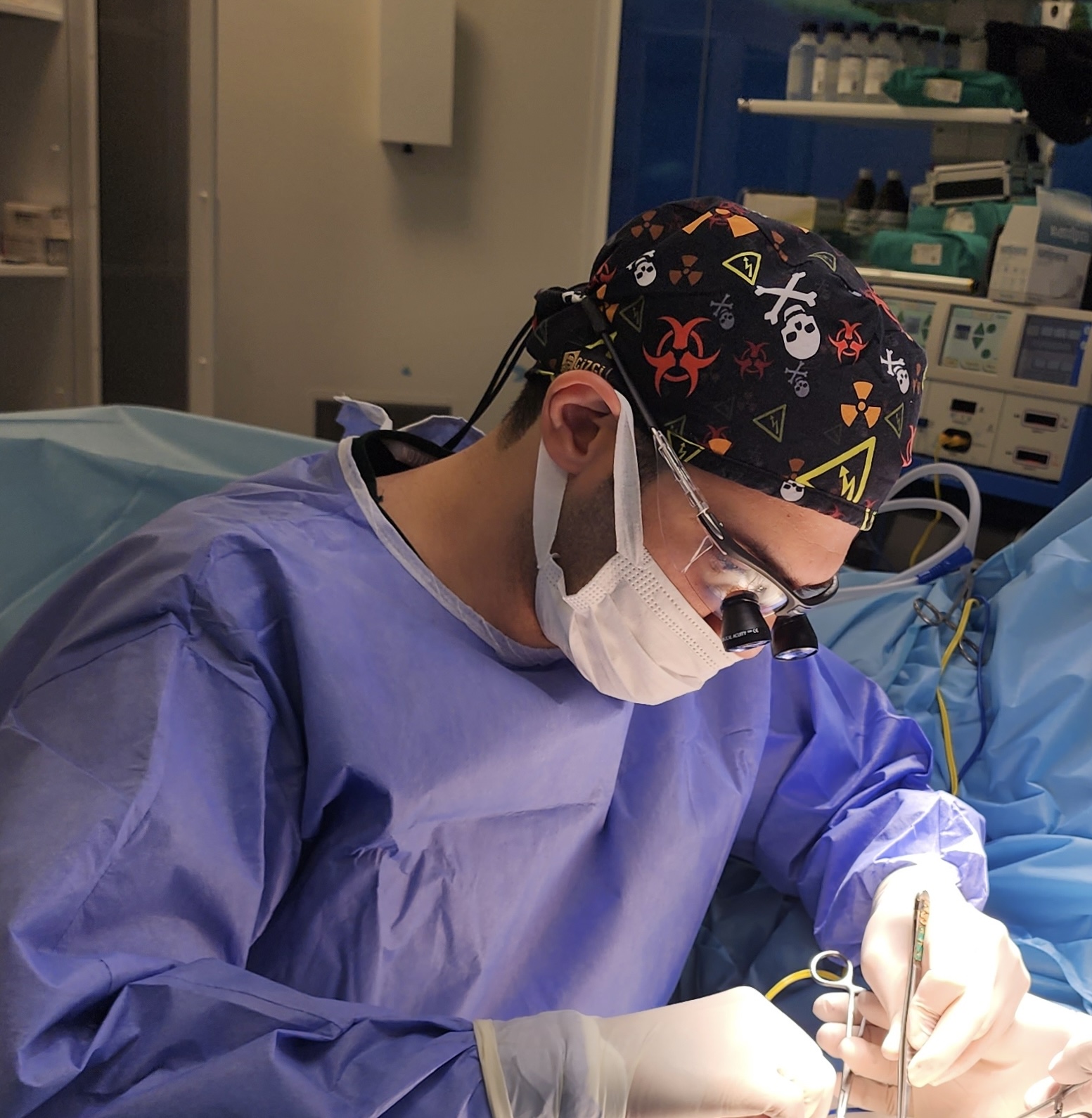
The most important surgical challenge in this patient group is having experience in vascular and nerve microsurgery, and especially being able to safely separate tissues within scarred areas.
In previously traumatized or previously operated regions, the anatomy is often distorted. Nerves, vessels, and soft tissues may have deviated from their normal planes. For this reason, in these operations, not only technical knowledge but also command of the tissues and experience in safe dissection are essential.
What Makes Your Approach Different in This Field?
The areas in which I specialize—vascular surgery, nerve surgery, microsurgery, tissue transfer, and peripheral nerve surgery—actually form a common field of soft tissue reconstruction. The same core surgical principles are used in facial paralysis surgery, brachial plexus surgery, and these types of arm and hand nerve–vessel injuries.
In other words, the logic of the surgery I perform here is not separate from the advanced nerve and microsurgical procedures I perform in other regions; it is built on the same fundamental principles.
Another factor that distinguishes me in this field is my intensive surgical practice focused on nerve, vessel, and soft tissue reconstruction together with my microsurgical experience in Taiwan. For me, this area represents more advanced and more specialized cases rather than routine hand surgery.
Do You Still Perform Emergency Finger Replantation Surgery?
Although I have performed many emergency finger replantation surgeries in the past, my current practice is no longer built around routine emergency replantation cases.
My time and focus are now directed more toward:
- complex nerve and vascular injuries
- late problems related to these injuries
- reconstructive procedures and transfers aimed at restoring function
Do You Perform Toe-to-Thumb or Toe-to-Finger Transfer Surgery?
Yes. Because these operations are elective reconstructive procedures and require major experience in microsurgery, nerve repair, and vascular reconstruction, I do perform them in selected patients.
My main priority in this field is function, not appearance alone. For this reason, I consider these procedures especially in patients who are likely to gain meaningful functional benefit — most importantly in thumb reconstruction, and in selected cases of approximately 2–3 cm shortening in other fingers.
These operations are not procedures I perform primarily for cosmetic reasons. Their main purpose is to improve hand function.
In congenital finger deficiencies, the success and indication of this type of surgery are more controversial in the literature. For this reason, I generally prefer these procedures more often in post-traumatic patients rather than in congenital cases.
In appropriate patients, toe-to-thumb or toe-to-finger transfer can be performed successfully, depending on the type and level of the defect. The thumb, the great toe, or the second toe may be considered according to the functional need and the structure of the defect.
In some cases, smaller tissue transfers may also be possible without sacrificing a toe completely — for example in selected nail bed, pulp, or limited fingertip defects. However, these patients must be evaluated individually, and the decision should be made together after detailed examination.
My current practice is focused more on complex nerve–vessel injuries and their late reconstruction.
Is Surgery Still Possible in Old Injuries?
Yes, it is. However, the success rate varies according to the type of injury and the time that has passed.
In some patients with sensory loss, surgery may still be meaningful even at a late stage. In movement loss, however, early intervention is usually more successful, because the chances of achieving improvement through nerve repair or nerve grafting are higher early on.
At a later stage, the nerve alone may no longer be enough, and more advanced methods such as muscle transfer may be needed.
What Should the Patient’s Expectations Be?
The size of the injury, the time that has passed, and which structures are affected directly determine the result.
In some patients, very good recovery of function can be achieved. In others, the goal is not complete return to normal, but a more usable hand, better sensation, or a more stable arm.
Common Patient Scenarios
I cut my finger while cooking, and now part of it feels numb. What should I do?
What has most likely happened is injury to one of the digital sensory nerves of the finger. If this is repaired early — especially within the first week — the quality of recovery is usually better and more predictable. In many patients, this type of surgery can even be performed under local anesthesia. Recovery is usually relatively straightforward, and a small splint may be needed for about 3 weeks.
Even if the repair is delayed, surgery may still be possible years later, and meaningful sensory recovery may still be achieved. However, delayed repair increases the likelihood that a small nerve graft may be required. This may involve either a small nerve taken from the body or, in selected cases, a commercially available nerve graft.
I had a penetrating cut injury. The wound looks small, but I cannot move part of my hand or finger. What could be wrong?
In this situation, the problem may involve tendon, nerve, or muscle injury. Even if the skin wound appears small from the outside, the deeper structures may have been significantly damaged. If movement is lost, surgery is often required. A detailed examination is necessary in order to understand which structures have been injured and what type of repair is needed.
I had a traffic accident and now have a major hand or forearm injury. I cannot perform several movements. What should I do?
In this patient group, detailed examination and, when necessary, imaging studies are used to determine the extent of vessel, nerve, tendon, muscle, and soft tissue injury. In many cases, surgery is planned in order to restore as much function as possible. Depending on the injury, the operation may include repair of skin loss, vessel and nerve injury, tendon problems, and muscle damage.
The most important factors affecting recovery are the severity of the trauma, the time that has passed since the injury, the quality of physical therapy, and the age of the patient. For this reason, after examination, each patient should be clearly informed about what is possible and how much improvement can realistically be expected.
Short FAQs
Can nerves and vessels be repaired in the same operation?
Yes. In suitable cases, nerve, vessel, and soft tissue repair can be planned together in the same surgery.
Is surgery still possible in old injuries?
Yes. However, results may differ in delayed cases, and some patients may require additional procedures such as muscle transfer.
How long does it take for results to appear?
This depends on the procedure performed. In smaller repairs, results may be seen earlier, while in major nerve injuries recovery may take longer.
Is it necessary to work together with orthopedics?
In patients with bone and joint problems, we can plan surgery together with orthopedics. However, in cases requiring repair of vessels, nerves, muscles, tendons, and soft tissues, I perform the intervention.
How important is physical therapy?
Physical therapy is extremely important after these operations and often plays a role that is just as decisive as the surgery itself. The rehabilitation program is adjusted according to the type of procedure performed. For a good result, surgery and rehabilitation must be considered together.
Does every cut nerve or vessel need to be repaired?
No. We do not aim to repair every cut nerve or vessel. Some nerves and vessels may have redundancy and may not create a meaningful problem if left unrepaired. In such cases, unnecessary repair may not always be the best approach. What matters is correctly identifying which structure is truly critical and planning the repair accordingly.